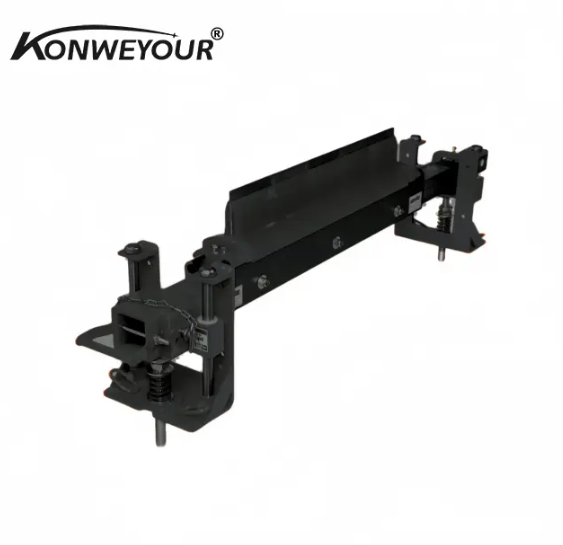
I’ve stood on enough catwalks, boots caked with fines, to know one thing: carryback never sleeps. The right secondary cleaner makes the difference between a tidy transfer point and a maintenance headache. This Tungsten Carbide Secondary Belt Cleaner comes from a team operating out of No. 13 Gongqiang Road, Nangong Economic Development Zone, Xingtai City, Hebei Province—an address many bulk handlers now recognize for rugged kit that just works.
What’s trending—and why it matters
Two big shifts: higher belt speeds (now routinely 3–6 m/s) and stickier blends (recycled fines, clay-laden ore). Plants need secondary scrapers with carbide tips that hold an edge, constant-force tensioners, and designs that play nice with worn splices. In fact, many customers say the newest Tungsten Carbide Secondary Belt Cleaner models deliver 95–99% residual fines removal after the primary—when installed correctly, of course.
At-a-glance specifications
| Blade material |
Tungsten carbide (cemented WC–Co, ≈6–12% Co) |
| Blade hardness |
≈ 88–92 HRA (real-world may vary by ore) |
| Operating belt speed |
Up to ≈ 6.5 m/s (consult for ≥7 m/s) |
| Temp range |
-30°C to +80°C standard; high-temp options on request |
| Blade width / profile |
Modular segments, beveled edge 60–70°, spring-loaded |
| Tensioning |
Constant-force or torque-arm; indicator marks for set-and-check |
| Service life |
≈ 12–24 months typical; abrasive quartzites may be shorter |
How it’s built and proven
Materials: cemented WC–Co carbide tips brazed to stainless or alloy steel blade carriers; epoxy-coated cross-shaft; corrosion-resistant fasteners.
Methods: precision grinding for edge geometry; heat control during brazing; fixture-based alignment; dynamic tension calibration.
Testing: ASTM G65 abrasion screening on coupon samples; belt-safe pressure verification; spark/antistatic checks per ISO 284; field carryback audits using CEMA-referenced protocols.
Sample site data (aggregates, 1600 mm belt, 4.2 m/s): carryback reduced from ≈2.8 kg to ≈0.7 kg per 100 m after adding a Tungsten Carbide Secondary Belt Cleaner; maintenance time down ≈35%. To be honest, results swing with moisture and fines content—but that’s the point of carbide: consistency.
Where it shines
Iron ore, copper, coal (wet), limestone, cement clinker, fertilizer, grain terminals, and power plant ash lines. Ideal just past the head pulley, after the primary, especially on belts with occasional belt flap or slightly crowned pulleys.
Vendor snapshot (quick comparison)
| Vendor |
Carbide grade |
Tensioning |
Compliance |
Notes |
|---|
| JTC Conveyor (origin: Xingtai, Hebei) |
WC–Co, high HRA |
Constant-force w/ indicator |
ISO 9001; ISO 284; CEMA aligned |
Strong spares program, quick-ship |
| Generic Import |
WC–Co (unspecified) |
Manual spring |
Basic CE docs |
Lower cost; variable QC |
| Local Fabricator |
Hard steel tips |
Bolt preload |
Shop test only |
Fast service; shorter life |
Customization and options
Belt widths 500–2400 mm; segmented or continuous blades; food-grade or anti-corrosion finishes; low-profile frames for tight chutes; ATEX documentation for dust zones (on request). Honestly, the quick-change blade cassettes are underrated—five-minute swaps are real.
Mini case stories
Iron ore (1,800 mm, 5.5 m/s): Carryback cut ≈72%; spillage cleanup reduced one full shift/week. “Once tensioned, we just check the indicator,” the maintenance lead told me.
Cement plant (clinker, 1200 mm): After upgrading to a Tungsten Carbide Secondary Belt Cleaner, dust curtains lasted longer—less edge fray from rogue fines.
Compliance and good practice
Align with CEMA belt-cleaning guidelines; verify antistatic per ISO 284; specify abrasion credentials (ASTM G65) for the carbide; keep the tensioner within the manufacturer’s window. Real-world use may vary, but the standard playbook still wins.
References:
- CEMA: Belt Cleaners – Best Practices & Application Guidelines. https://cemanet.org
- ISO 284: Conveyor belts — Electrical conductivity — Specification and test method. https://www.iso.org
- ASTM G65: Standard Test Method for Measuring Abrasion Using the Dry Sand/Rubber Wheel Apparatus. https://www.astm.org
- DIN 22101: Continuous conveyors — Belt conveyors for loose bulk materials. https://www.din.de