Unlocking Efficiency: The Power of a Modern Pneumatic Conveyor System
In the relentless pursuit of operational excellence, modern industries constantly seek robust and efficient solutions for bulk material handling. Among these, the pneumatic conveyor system stands as a cornerstone technology, indispensable for safely and effectively transporting a vast array of dry bulk solids and powders. Far from being a mere pipe-and-blower setup, contemporary pneumatic systems represent sophisticated engineering marvels, integrating advanced controls and precise design to move materials through enclosed pipelines using gas flow – typically air. This method offers unparalleled advantages over traditional mechanical conveyors, especially when dealing with delicate, hazardous, or fine particulate materials where cleanliness, contamination prevention, and flexibility are paramount. Consider the sheer scale: the global bulk material handling market, a segment where pneumatic conveying plays a pivotal role, was valued at approximately $62 billion in 2022 and is projected to reach nearly $90 billion by 2030, driven significantly by the increasing demand for automated and hygienic material transfer solutions. This growth underscores the critical importance of these systems in sectors ranging from food processing and pharmaceuticals to plastics and chemicals. The inherent enclosed nature of pneumatic conveying eliminates dust emissions, significantly reduces product loss, and ensures a sterile environment, factors that translate directly into improved product quality, enhanced worker safety, and substantial operational savings. Businesses today are not just looking for movement; they demand precision, efficiency, and a solution that integrates seamlessly into complex production lines, reducing manual labor and mitigating risks associated with human error. The strategic implementation of a well-designed pneumatic conveyor system is no longer a luxury but a fundamental necessity for competitive advantage and sustainable growth.
Unveiling the Mechanics: Technical Advantages and Operational Principles
At its heart, a pneumatic conveyor system operates on a deceptively simple principle: leveraging the differential pressure of a gas stream to entrain and propel bulk materials. However, the engineering intricacies behind this principle allow for remarkable versatility and efficiency. Broadly, these systems are categorized into two primary types: dilute phase and dense phase. Dilute phase conveying, characterized by high air velocity and low material-to-air ratios, is ideal for light, non-abrasive, and non-fragile materials. It functions by suspending particles within the airstream, transporting them at velocities that can exceed 20 meters per second, enabling throughputs of up to 100 tons per hour for specific applications. Its advantages include relatively lower capital cost, simpler design, and the ability to handle various material types over long distances. Conversely, dense phase conveying operates with higher material-to-air ratios and lower air velocities, often utilizing slugs of material separated by pockets of air. This method is exceptionally suited for fragile, abrasive, or high-density materials, significantly reducing particle attrition and pipeline wear. For instance, in sensitive applications like transferring coffee beans or specific pharmaceutical granules, dense phase systems have demonstrated reductions in material degradation by as much as 80% compared to dilute phase or mechanical methods. Furthermore, dense phase conveying can offer substantial energy savings, sometimes up to 30% for specific applications, due to reduced air volume requirements. Beyond material integrity, the technical superiority extends to flexibility in pipeline routing, allowing systems to navigate complex facility layouts with bends and vertical lifts where mechanical conveyors would struggle or be impossible. The enclosed design inherently minimizes cross-contamination, eliminates fugitive dust emissions, and enhances occupational safety by reducing exposure to hazardous materials, making it a preferred choice for stringent hygienic and environmental standards.
Architectural Elements: Key Components and Critical Design Considerations
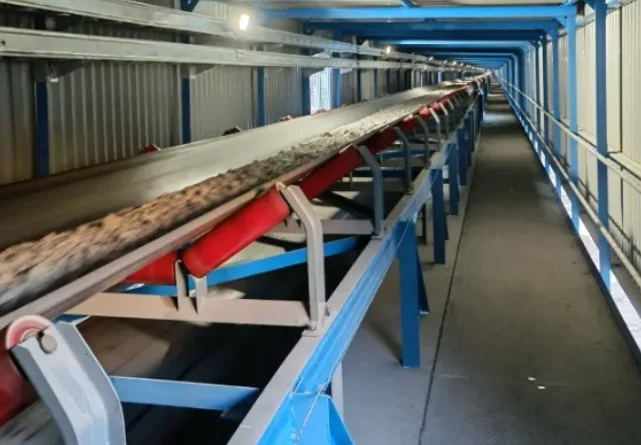
The efficacy of a pneumatic conveyor system is a direct function of its meticulously designed components and the careful consideration of various operational parameters. At the core, every system requires a reliable air moving device, typically a positive displacement blower or compressor, to generate the necessary airflow. Material is then introduced into the conveying line via a feeding mechanism, such as a rotary airlock valve, venturi eductor, or pressure pot. Rotary valves are widely used for continuous feeding, while pressure pots excel in dense phase applications for batch transfer of abrasive materials. The conveying line itself, comprising pipes and bends, must be specified with appropriate materials (e.g., stainless steel, abrasion-resistant alloys) and diameters to suit the material characteristics and throughput requirements. At the destination, a receiver or cyclone separates the conveyed material from the air, which is then vented through a dust collector or filter to ensure environmental compliance and air quality. Crucial to system performance is the control system, which integrates sensors, PLCs, and HMIs to monitor and manage parameters like air pressure, flow rates, and material levels, ensuring optimal operation and safety. Designing an optimal system is a complex undertaking, necessitating a deep understanding of the material properties: bulk density, particle size distribution, abrasiveness, friability, moisture content, and flow characteristics are all critical factors. For instance, a sticky or cohesive powder will require different system parameters and component choices than a free-flowing granular material. Conveying distance, elevation changes, desired capacity, and the specific facility layout also profoundly influence the system's design, including blower sizing, pipe diameter, and bend radii. Overlooking any of these considerations can lead to inefficiencies, blockages, excessive wear, or product degradation, underscoring the importance of expert engineering and precise material analysis during the design phase. A well-engineered system not only performs reliably but also optimizes energy consumption and minimizes maintenance requirements, yielding significant long-term cost benefits.
Real-World Impact: Diverse Applications Across Industrial Sectors
The versatility and inherent advantages of pneumatic conveyor systems have cemented their role across a myriad of industries, transforming how bulk materials are handled and processed. In the Food and Beverage sector, these systems are indispensable for transferring ingredients like flour, sugar, starch, coffee beans, and spices. For example, a major European biscuit manufacturer reported a 95% reduction in cross-contamination risks and a 15% increase in throughput after upgrading to a fully enclosed, sanitary dilute phase system for transferring different types of flour from storage silos to mixing stations. The dust-free operation ensures compliance with stringent hygiene standards and prevents spoilage. Similarly, in the Pharmaceutical industry, where product integrity and preventing contamination are paramount, dense phase pneumatic conveying is routinely used for delicate active pharmaceutical ingredients (APIs), excipients, and granulates. One leading pharmaceutical firm successfully implemented a dense phase conveying solution for transferring delicate powdered APIs, which resulted in an 80% reduction in particle attrition and an improved yield in their tablet pressing process. This technology minimizes human contact, supports cleanroom environments, and ensures precise batch control. The Plastics industry heavily relies on pneumatic conveyors for moving pellets, flakes, and regrind between production stages, such as from dryers to extruders or injection molding machines. Here, the systems prevent material degradation and maintain the integrity of the plastic, which is critical for product quality. In the Chemical sector, these systems handle a diverse range of materials, including hazardous chemicals, fertilizers, and pigments, ensuring safe and contained transfer, thereby protecting workers and the environment. A large chemical plant reduced hazardous dust exposure by 99% by switching from manual handling to a sealed pneumatic system for catalyst powders. Even in the Construction and Mining industries, pneumatic conveying finds application in transporting cement, fly ash, lime, and other fine aggregates, often over challenging terrains or within confined spaces, demonstrating its robust capabilities in demanding environments. These real-world applications underscore the system's ability to provide efficient, safe, and tailored material handling solutions across varied operational landscapes.
Navigating the Market: Manufacturer Comparison and Strategic Selection
The market for pneumatic conveyor systems is robust and competitive, populated by a diverse range of manufacturers, each with unique strengths, specializations, and service offerings. Choosing the right partner is as critical as selecting the right technology itself, as it directly impacts system performance, longevity, and return on investment. To illustrate the landscape and aid in strategic selection, consider a generic comparison of manufacturer archetypes:
Feature/Criteria | Manufacturer A (Specialized) | Manufacturer B (Comprehensive) | Manufacturer C (Cost-Effective) |
Primary Focus | Dense Phase for fragile/abrasive materials, specific industries (Pharma, Food) | Both Dilute & Dense Phase, broad industry application | Dilute Phase, general industrial applications (Plastics, Chemicals) |
Customization Capabilities | High; bespoke engineering for complex material properties and layouts | Moderate to High; modular designs with customization options | Standardized; limited customization for unique requirements |
Technological Innovation | Leading edge; significant R&D in energy efficiency, gentle handling, IoT integration | Solid R&D; adoption of proven, reliable technologies | Reliable, established technologies; less focus on bleeding-edge innovation |
After-Sales Support & Service | Excellent; dedicated technical support, global service network, predictive maintenance | Good; regional service centers, standard warranty, parts availability | Basic; limited on-site support, primarily remote troubleshooting |
Typical Project Lead Time | 16-24 weeks (due to custom engineering) | 10-18 weeks | 6-12 weeks (for standard configurations) |
Average Project Cost Range | $$$$ (Premium investment for high-value applications) | $$$ (Balanced cost-performance) | $$ (Economical for straightforward needs) |
Certifications/Standards | ISO 9001, ATEX, FDA-compliant materials, cGMP | ISO 9001, basic safety standards | Basic industrial standards |
When selecting a manufacturer, crucial criteria extend beyond initial cost. Evaluate their track record, industry-specific experience, and their ability to provide comprehensive material testing. Assess the quality of their engineering team and their commitment to safety standards and environmental compliance. Crucially, consider their after-sales support, spare parts availability, and the potential for long-term partnership. A manufacturer with robust R&D, a strong emphasis on energy efficiency, and a proven history of reliable installations often provides the best total cost of ownership over the system's lifespan. Partnering with a vendor who understands the nuances of your specific material and process can significantly mitigate risks and ensure optimal system performance for decades.
Tailored Excellence: Customization, Integration, and Future Innovations
While the fundamental principles of pneumatic conveying remain consistent, the true power of these systems lies in their capacity for extensive customization and seamless integration into diverse industrial environments. A one-size-fits-all approach rarely yields optimal results, given the vast differences in material characteristics, production volumes, facility layouts, and operational objectives. Customization can involve modifying pipe diameters and materials to accommodate abrasive or corrosive substances, designing specialized feeders for difficult-to-handle powders, or incorporating unique dust collection and filtration systems to meet specific environmental regulations. For instance, a food processing plant handling hygroscopic ingredients might require a system with dehumidified air and easy-to-clean components for rapid changeovers, while a plastics manufacturer might prioritize abrasion-resistant piping and specialized diverter valves for multiple destinations. Effective integration with existing plant infrastructure is equally vital. Modern pneumatic systems are often designed to communicate with higher-level control systems such as ERP (Enterprise Resource Planning) and MES (Manufacturing Execution Systems). This integration allows for real-time monitoring of material flow, automated batching, inventory management, and predictive maintenance scheduling, translating into enhanced operational visibility and efficiency. The future of pneumatic conveying is intrinsically linked to advancements in digital technology. We are witnessing the rise of systems equipped with IoT (Internet of Things) sensors that collect vast amounts of operational data – pressure, temperature, flow rates, vibration – which, when analyzed by AI algorithms, can predict potential equipment failures before they occur, optimizing maintenance schedules and minimizing downtime. Smart controls are enabling dynamic adjustments to conveying parameters in real-time, optimizing energy consumption based on current material properties and demand. Furthermore, modular designs are becoming increasingly popular, offering scalability and flexibility for future expansion or reconfigurations. The emphasis on sustainability is also driving innovations towards ultra-low energy consumption, reduced noise levels, and the use of recycled or more durable materials in construction. These developments ensure that pneumatic conveyor systems will continue to evolve, offering even greater levels of precision, efficiency, and environmental responsibility.
Strategic Investment: Optimizing Operations with Your Pneumatic Conveyor System
Ultimately, investing in a sophisticated pneumatic conveyor system is far more than a capital expenditure; it is a strategic decision that directly impacts an organization's long-term profitability, safety record, and competitive standing. The intrinsic benefits — from eliminating dust and product loss to enhancing worker safety and providing flexible routing options — culminate in a substantial return on investment. By embracing automated, enclosed material transfer, companies can significantly reduce labor costs associated with manual handling, minimize the risk of product contamination and degradation, and streamline their production processes. The data consistently supports this: industries that have transitioned from traditional mechanical or manual handling to pneumatic systems frequently report reductions in product spillage by over 90%, significant cuts in maintenance hours, and marked improvements in overall plant cleanliness and safety compliance. Furthermore, the ability of these systems to handle a vast array of materials, coupled with the potential for high throughputs and efficient energy utilization, makes them an adaptable solution for evolving operational demands. The journey from initial concept to a fully operational system requires careful planning, detailed material analysis, and partnership with experienced engineers and reputable manufacturers. Choosing a system that is precisely tailored to specific material characteristics, environmental conditions, and production goals ensures maximum efficiency and longevity. As industries continue to face pressure to optimize costs, increase productivity, and adhere to ever-stricter regulatory standards, the role of a well-implemented pneumatic conveyor system will only grow in importance. It represents a commitment to operational excellence, offering a robust foundation for future growth and innovation. Embracing this technology is not just about moving materials; it's about moving your business forward with greater efficiency, safety, and reliability.
Frequently Asked Questions About Pneumatic Conveyor Systems
What is a pneumatic conveyor system?
A pneumatic conveyor system is an industrial process that moves dry bulk materials or powders through an enclosed pipeline using air or another gas as the conveying medium. It operates by creating a pressure differential that entrains and propels the material from a feeding point to a receiving point.
What are the main types of pneumatic conveyors?
The two primary types are:
· Dilute Phase Conveying: High air velocity, low material-to-air ratio. Materials are suspended in the air stream. Suitable for light, non-abrasive materials.
· Dense Phase Conveying: Low air velocity, high material-to-air ratio. Materials move in slugs or batches. Ideal for fragile, abrasive, or heavy materials, minimizing degradation.
What materials can be conveyed using these systems?
A wide range of dry bulk solids and powders can be conveyed, including but not limited to: flours, sugars, starches, plastics pellets, powders, granules, chemicals, minerals (like cement, fly ash), pharmaceuticals, and various food ingredients.
What are the key benefits of using a pneumatic conveyor system?
Key benefits include: dust-free operation, reduced product contamination and loss, enhanced worker safety, flexible pipeline routing, lower maintenance requirements compared to some mechanical systems, gentle product handling, and often, higher throughputs over long distances.
How do you choose the right pneumatic conveyor system for an application?
Selection depends on several factors: material characteristics (bulk density, particle size, abrasiveness, friability, cohesiveness), conveying distance and desired capacity, facility layout, energy efficiency requirements, budget, and specific industry standards (e.g., hygiene, explosion protection). Material testing is often crucial.
What kind of maintenance is typically required for a pneumatic conveyor system?
Regular maintenance involves checking and replacing filters, inspecting pipes and bends for wear, servicing blowers/compressors, lubricating rotary valves, and calibrating sensors. Preventive maintenance based on operational data is increasingly common to ensure longevity and efficiency.
Are pneumatic conveying systems energy efficient?
Energy efficiency varies significantly with system design and type. Dense phase systems generally use less air and can be more energy-efficient for specific applications. Modern systems incorporate advanced controls and optimized designs to minimize energy consumption, and factors like pipe routing, air mover selection, and operational parameters play a crucial role in overall energy footprint.